Showing posts with label beef. Show all posts

Surprise! London Broil does not speak with an English accent.

You may be surprised (or maybe not) to find that London Broil has nothing to do with London. In fact, this beef dish doesn't even exist in London. It is traditionally a North American dish, particularly the United States and southern Canada, where it sometimes consists of a loaf of ground beef or spiced veal and wrapped with the flank of the beef. But hunt for it in London and you'll be exhausted in your search and left empty handed by days end. Do yourself a favor and stick with the more elegant and spectacular Beef Wellington during your stay there.

So, how did London Broil come to be called as it is? Why not call it American Broil or Canada Loaf? The search for the answer runs endless with no real results; therefore, if there is anybody out there that knows the TRUE story of how this became known as London Broil, you are welcome to comment on this post.

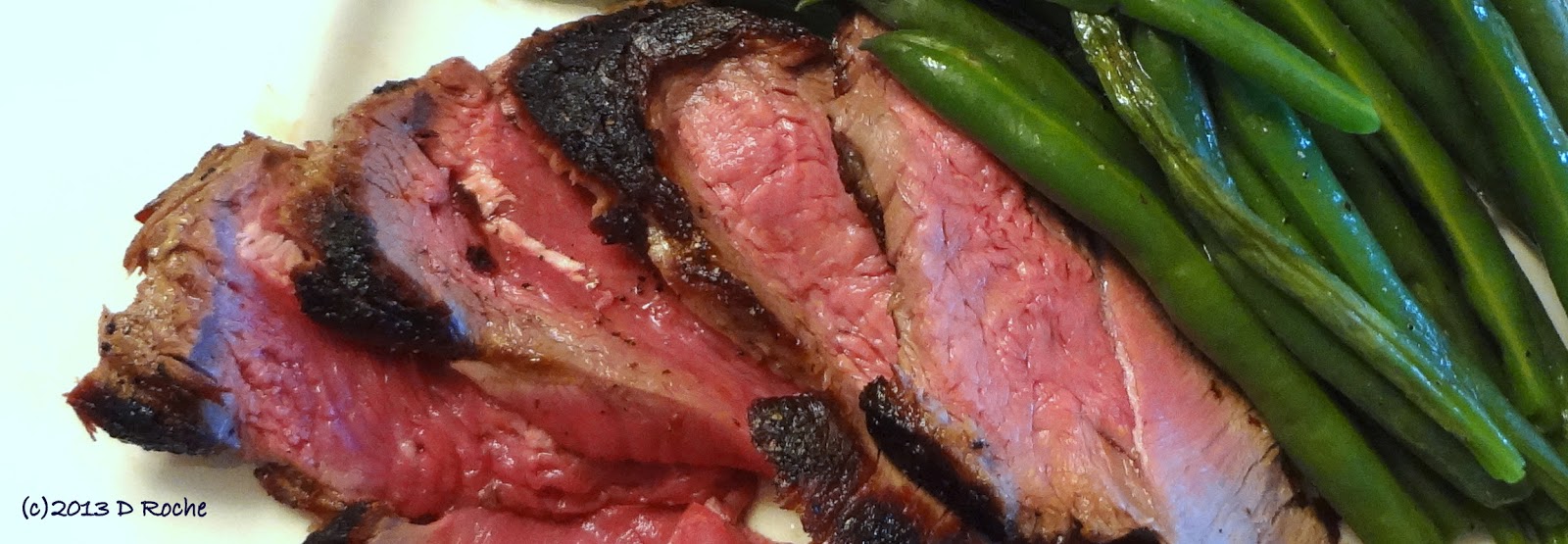
London Broil is usually prepared with a cut of flank steak. More recently however, other cuts of meat have been drawn into the fold such as Top Round and Top Sirloin. The term appears to be more the way this meat is prepared than the cut of beef itself. Traditionally, the cut of beef is marinated, then seared, and finally broiled or cooked over a grill. It is then allowed to rest for a short time to allow the juices to set, and then sliced thin diagonally across the grain. You can serve it with a light sauce made from de-glazing the pan it was cooked in with a half cup of red wine, or simply with a side of Dijon mustard, which gives each bite a bit more of a punch and tends to accentuate the flavor.

One thing to remember when preparing London Broil, do not overcook it! It should be prepared either rare or medium rare. If you cook it to medium or well done, you might as well return it to your butcher and see if he can pound it into some new leather sandals just in time for Summer. And if you got a three pounder, he might be able to squeeze a pair for a loved one as well.

There is a great tendency for beef to cook too dry and quickly under a broiler; therefore, it is important to watch it carefully, turning it every few minutes. Since it needs to have intense heat 3 inches from its surface, leave the oven door ajar with a knife so that the heating elements don't turn off and on. With the door shut, it will bake and you will have a drier and more well done finished product. Remember, these cuts of meat don't contain much marbling (fat), a component that tends to keep meat moist and juicy, so a broiler promotes evaporation. Again, if the door is shut, there is no where that evaporation can go, which can result in partial "steaming" effect.

The other method of preparing London Broil is to grill it. Grilling works well in that you get a nice searing and caramelization and any steam just escapes without it contributing to the cooking process. When grilling, make absolutely sure that the grill is very hot before placing your cut of beef on it. You will get much better results that way and your beef will have the nice semi charred exterior grill lines, while leaving the center a nice deep pink, just the way you want it.

There is a third method of preparing this dish and that is by simply heating a skillet to a high heat, then adding some olive oil, allowing it to begin to smoke and then placing your cut of meat in the pan. Saute it on high heat for about 3 1/2 minutes on each side for a 1 1/2 inch thickness.

Finally, an important factor to remember when you are picking out your cut of beef, buy vertical as opposed to horizontal. What this means is select a thicker cut with a smaller surface as opposed to thinner and larger in area. By doing so, you are almost guarantee that your beef will be cooked to perfection. Buy a cut that is a good 1 1/2 to 2 inches thick and you will be very happy with the results.

Whatever cut of beef you choose to prepare a London Broil, enjoy it. It is a wonderful way of preparing beef and a smaller cut will go a long ways. Pair your beef with green beans and mash potatoes or keep it light and serve it alongside a tossed green salad with an olive oil and rice vinegar dressing. And always have a nice slice or chunk of crusty French or Italian bread to soak up those wonderful juices.

Presentation goes a long way to making simplicity elegant


You can take simple ingredients that are easy on the wallet and transform them into an elegant dish simply by how you choose to place them on a dinner plate. Presentation plays a most important role in the appeal and impressions you will make on your guests.

Although the sense of smell is the first recognition of what may soon present itself at the dinner table, sight is the affirmation of whether or not the nose was correct in its assumption. After all, most of us get the first taste of a meal with our eyes; hence the phrase, "we eat with our eyes". The food industry spends millions each year making everything from junk food to gourmet items look appealing and enticing enough for you to go out and purchase those products. Careful attention is paid to how foods are placed, the quantity plated, and color. Our eyes gloss over the professionally edited photos and the imagination of how good the food pictured must taste. The nose is nowhere to be found.

A case in point, the dinner plate pictured above was by no means shot by a professional photographer, nor was the editing performed beyond  the average reader's capabilities; however, pay close attention to the ingredients, quantity, placement, and color. The ingredients are simple and limited to 3 or 4 including sauce. Next, you see the plate is not filled to overflowing. As far as elegance in the beholder's eyes are concerned, less is more. Notice how the food has been plated, with some items overlapping, others placed in different areas of the plate, in this example, the baby potatoes. There are no rules that say all like items have to be grouped together. Also notice  there is no overabundance of sauce, just enough to compliment the flavors of the main ingredients. Finally, color provides the final touches and accents to the dish, giving the presentation dimension.

The baby green beans are steamed for about 7 minutes and gently tossed with butter (cost approx. $0.80 per serving.

The baby Yukon Gold potatoes are lightly boiled for  20 to 25 minutes, 4 to 5 per person (cost approx. $1.00 per person @ $3.99/lb. and are about 1 inch diameter).

The meatball (top round beef, Italian sweet sausage, parsley, garlic, egg, salt, pepper, and a bit of bread crumbs (1 level teaspoon per meatball) and is sauteed in olive oil over medium high heat until browned, then pan is place in a 350 oven, baked for another 30 minutes. Each meatball is approximately 3 inches in diameter and is 3 oz. (approx. cost $1.10 per person).

The sauce is a simple sauce made from the pan drippings of the finished meatballs. Meatballs are removed from pan, then pan is deglazed with a bit of red wine and beef broth in equal portions and reduced by half, using burner setting at medium, then medium low. Once reduced, add a level teaspoon of tomato paste, salt and pepper to taste. Remove from heat and stir in 2 tablespoons of butter until melted and sauce has thickened (approx. cost $0.55 per person).

The cost for a dinner of 4 comes to approximately $3.45 per person and another 30 cents for sundry items like butter and spices. At $3.75 per person, this simple dinner, well presented, not only exudes elegance, but at a bargain price and your guests won't even know.

Remember, presentation is very important here as it can make a world of difference. But isn't that true for other things in our lives, the way we wear our clothes and decorate our homes? The word here is style - at a bargain!

Spaghetti and meat balls.... a billion fans and a billion ways, but here's my way

Who doesn't love spaghetti and meat balls please leave the room. This has got to be on the favorites list of most everyone. For you vegans out there, just leave out the meatballs. This recipe for meat balls in a tomato base goes back 50 years in our family and large quantities were always made so that there was a guarantee of leftovers. Otherwise, good luck! We'll first start by preparing the meat balls. These have a wonderful moist texture and are so savory, you might even want to remember the recipe for meat loaf sometime. Here's what you'll need:

1 lb. of lean ground beef
1 lb. of ground sweet Italian sausage
1 cup of Panko bread crumbs
1 whole egg
1 egg yolk
1/2 cup minced fresh parsley
1 teaspoon dried oregano
1 teaspoon smoked Spanish papika
1 teaspoon salt
1 teaspoon ground black pepper
3 tablespoons Worcestershire sauce
1 teaspoon dried basil
1 teaspoon anise seed
1 cup of flour in a bowl
1/4 cup of olive oil

In a large bowl, add the beef and sausage, breaking it in chunks. Next, add the eggs and Worcestershire sauce and with your hands dig in and mix those ingredients well. Make sure the sausage and beef integrate completely. Now add all your remaining ingredients and continue to mix until everything is well mixed and incorporated.

Now wash your hands well, rinse, but do not towel dry them. When you roll your meat mixture into meat balls, having moist hands will keep the meat from sticking to your hands, so keep them wet. Starting with a soup spoon,  spoon enough mixture into your palm to make a ball about 1 1/2 inch in diameter. Begin to roll the meat into a nice round ball using both your palms. Set each one on a sheet of parchment paper. This amount will make approximately 24 meatballs.

Now heat the oil in a large saute pan over medium high heat. While waiting for the oil to heat, start dredging the meat balls in the bowl of flour two at a time. When oil is hot, carefully place the meat balls in the pan, 8 to 10 at a time and saute on each side until browned. This will usually take about 8 minutes per batch. Once each batch is browned, set then on a large plate lined with paper towels. When all meat balls are browned, discard oil and wipe your saute pan of any burned or browned flour. Discard the flour and wash your bowl. Now we will prepare the sauce. For this sauce you will need:

2 large yellow onions, chopped
6 cloves of garlic, finely chopped
2 carrots, finely sliced
2 stalks of celery, finely chopped
6 medium brown mushrooms, chopped
1 cup of Chianti Wine
1/2 cup beef stock
1 teaspoon of anchovy paste
3 tablespoons of capers
1 teaspoon of salt
1 teaspoon of ground pepper
1 Italian green pepper finely chopped
1 16 oz can of diced tomatoes
1 6 oz can of tomato paste
4 tablespoons of olive oil
1 teaspoon of oregano (dried)
1 teaspoon of basil (dried)

In  the large pan you used, heat the olive oil over medium heat. When oil is hot, saute the onions until translucent. Next, add the garlic and green peppers. Continue to saute over medium heat for a few minutes and add the celery and carrots. Stir and saute for an additional few minutes or so. Now add the Chianti wine and deglaze your pan. Add the diced tomatoes and the mushrooms, reduce heat to medium low. Next add all the remaining dry ingredients including the oregano, basil, salt and pepper,and stir well. Continue to cook over medium low for about 5 minutes and add the beef stock, anchovy paste, capers, and tomato paste. Dissolve the paste and anchovy, mixing and incorporating everything well. Your sauce should have a nice "puree" consistency now. If it's too thick for you, just add a bit more beef stock.

Continue to cook uncovered for another few minutes and then add the meat balls back into the pan, stiring them in so that they are well coated and incorporated into the sauce. Reduce heat to low, cover, and cook for an additional 15 minutes. When finished, uncover, shut the heat off, and allow the sauce to settle and develop a nice thick creamy texture.

While the sauce was slow cooking, you should have brought a large pot of water to a boil. Choose your choice of pasta (spaghetti or linguini). Add a generous amount of salt to the water, but leave the oil out. Cook your pasta for about 8 to 10 minutes or until it is al dente. Remove pasta using a large fork or pinchers and add to a large serving bowl. Don't remove pasta by draining and DO NOT RINSE over water! By removing the pasta as instructed you'll take some of the pasta water with you which will keep the pasta from sticking and also add flavoring to the sauce. Once pasta is in the serving bowl, add a small ladle of the sauce to the pasta and stir well so that it is nicely coated with a think layer of the sauce. Add the meat balls over the pasta and transfer the sauce to another serving bowl and voila, dinner is ready. Enjoy with wonderful Italian bread, sprinkling of grated Parm or Gruyere, and finish off with a generous helping of butter lettuce and a mild olive oil and lemon juice dressing. Enjoy !!

Food Diversity marries Top Sirloin and Brussel Sprouts

It's amazing how simple combinations of foods that you wouldn't think go well together can create such a wonderful marriage of savory flavors. It is the job of NonChefNick to find these combinations, try them out, and wow the readers with the results of endless possibilities.

Take a simple Top Sirloin steak, a handful of fresh Brussel Sprouts (or frozen), a bit of red wine, salt, pepper, and garlic, and you will create a simple to make dish that will surely impress your special someone. There's no need to fill it up with starches and carbs, just simple, sauteed Top Sirloin and oven roasted Brussel Sprouts, the combination of flavors that will have you smacking your lips for more. This entree will certainly feel at home under candlelight and a bottle of nice Cabernet. Finish off with a refreshing salad of mixed greens, and never forget to save room for a couple of wonderful dark chocolate truffles to fuel the continued romantic evening. Send the kids to the baby sitter. Tonight is YOUR night.

You and your loved one should work on this together. Start by gathering all your ingredients.

2 nice 6 oz. Top Sirloin or Filet Mignon steaks
Approximately 12 Brussel Sprouts, cut in halves
4 cloves of garlic, chopped
6 tablespoons of olive oil
2/3 cup of red wine
salt and pepper to taste
1 tablespoon of butter (optional)

Preheat your oven to 400 before you start anything. Next, in a bowl, mix the Brussel Sprouts with 3 tablespoons of olive oil with some salt, pepper, and the garlic. Make sure sprouts are well coated. Transfer to a foil lined cookie sheet and roast in the oven for about 25 minutes.

While Brussel Sprouts are roasting, heat the remaining olive oil in a frying pan over medium high heat until it begins to smoke. Pat dry your steaks with a paper towel. Saute appproximately 2 to 3 minutes on each side, adding your desired pinches of salt and course ground pepper. Remove steaks and set on a heated plate and loosely cover with foil to keep meat warm. Deglaze your pan over medium low heat with the red wine and allow to reduce by half. Add the butter and stir until well melted and blended with the sauce.

Finally, remove the Brussel Sprouts and garlic from oven and transfer to the pan and stir into the sauce. Set each steak on dinner plates (heated) and spoon the Brussel Sprouts and sauce over the steaks. Serve hot and enjoy. I tell you, this is delicious!

Prime Rib of Beef makes a perfect last meal of 2009


There isn't much that can top a wonderful Prime Rib of Beef for the holidays. On that same note, not much can top its price these days either; however, if you shop around, you can find a nice cut, not too large, and boneless for a reasonable price. As an example, I recently found a boneless four pound roast for about $25 that served six and nobody went home hungry. That comes to just over $4 per person and not bad for a special dinner party.

There are a number of ways to cook a nice Prime Rib roast. I recently read a recipe that called for baking 30 minutes at 500 and then shutting the oven off and leaving the door closed, not removing the roast for several hours. Another calls for a slow cooking at 300. I've not tried either method. I like a nice rare cut of meat and so I have found that if you high heat it for a shorter period of time, you'll get that nice charred, caramelized exterior with a crispy fat tissue and wonderful pink interior that oozes out succulent juices for your sauce. Once you've found your method that works, it's hard to try something new. Afterall, why would you fix something that's not broke? Realizing this, I'm sure most of you have your own cooking that works; however, I still feel compelled to share mine with you and you can do what you want with it.

I decided to marinade this roast for a few hours this time around. I normally just rub it with olive oil, pepper and salt it well, sear it, and then in the oven it goes. Here is what I used for marinading:

approximately 4 lb boneless Prime Rib Roast
1/2 cup of olive oil
4 tablespoons of Worcestershire Sauce
2 teaspoons of coarse ground black pepper
2 teaspoons of sea salt
1 teaspoon of Dijon mustard
1 teaspoon of tomato paste
1 teaspoon of Cajun spice rub
4 cloves of garlic crushed to a paste

Take all ingredients and mix very well. Transfer to a large sealable plastic freezer type bag. One side of your rib roast will usually have a layer of fat. With a sharp knife, make a series of slits deep enough to cut through the fat but not into the meat. Place the roast into the plastic bag, seal tightly and roll the roast so that  it is coated with the marinade and place it in your refridgerator for about 2 to 3 hours.

In the meantime, have these ingredients ready:

1/4 cup of olive oil
1 teaspoon of coarsely cracked pepper
1 cup of red Burgundy wine
1/2 lb of baby button mushrooms (white or brown), stems removed
1/2 cup of beef stock
20 cloves of garlic, whole
1/4 cup of finely chopped parsley
1 tablespoon of butter

Preheat your oven to 450. While oven is preheating, remove roast from marinade bag. Heat half of your oil over medium high heat and sear your roast on all sides to lock flavors. Make sure you  sear approximately 2 minutes on each side. I should take a moment to request that you do not throw out the remaining marinade in the bag. You will want some of that for later. I'll explain when the time comes. Save the pan and drippings that the roast was seared in.

Now that you've seared your roast, transfer it into a baking dish. If your dish or pan has a rack, place the roast on top of that. Do not add any liquid what so ever to the bottom of the pan. Bake at 450 for about 20 minutes, then reduce oven temperature to 400 and continue baking for 14 minutes per pound for rare, 16 minutes per pound for medium rare and if you want it medium or well done, buy a chicken instead. This four pound roast is being baked at 14 minutes per pound. Bake with the fat side up so that any fat drippings will drip down the sides of the roast. Furthermore, the fat will be nice and charred and crispy when done. When cooking is complete, remove the roast from the oven and let it set for 15 minutes UNCOVERED, so that the juices will set in. Since the roast will continue to cook a bit while resting, covering it will not only cook it more, but it will also cause the steam from the moisture to soften the crispy surface and you don't want that.

In the meantime, while the roast is in the oven, you can begin your sauce preparation. You can wait until 30 minutes before your roast is finished baking if you want. It's not that important. Take the frying pan that the drippings are in and reheat over medium high heat. Once hot, add the wine and beef stock and bring to a boil. Once boiling, reduce heat to low and scrape the bottom of the pan carefully with a wooden spatula. Remember that marinade I asked you to save? Well, now take two tablespoons of it and stir it into your sauce. Continue to stir so that drippings are well blended. Allow to slow cook so that liquid reduces by half.

While sauce is cooking, in another saute pan, heat the rest of the olive oil over medium high heat, then add your mushrooms, sauteeing them until they are a light golden color. Do not add any seasonings, especially salt, as salt will cause the mushrooms to sweat and you won't get that golden brown color you're looking for. Once mushrooms are nicely browned, add the garlic and saute for an additional 2 minutes. When complete, add the mushrooms and garlic to your sauce and stir well. Reduce heat to simmer or warm and cover.

When the roast is out of the oven and has rested for 15 minutes, it's time to finish your sauce. Add your butter and stir until it is melted and has blended well. If the roast has given you drippings while resting, add that to the sauce. Add your pepper and parsley and stir well. Set your roast on a serving platter and pour a few tablespoons of the sauce over the top. Take the rest of the sauce and serve it separately in a saucier or small bowl.


Your rib roast should be a beautiful pink rare when sliced and be very moist. You can serve a baked potato and steamed baby green beans as side dishes, or buttered linguine and peas. Either works wonderful with this meat. Enjoy this dish on New Year's Eve with close friends and it will be an evening you will remember. Bon Appetit!

Plain and Simple.... POT ROAST


What's not to like about Pot Roast? This is a dish that can be found on the dinner tables of most cultures around the world or at least  a variation  of it. Whether it be pork, beef, or lamb, pot roasting is basically the use of braising, meaning searing at a high temperature and then slow cooking covered in various amounts of liquid. One thing is for certain, it's a way of taking a cheap cut of meat and making it taste so delicious and be so tender.

Everyone seems to have their own recipe for Pot Roast and in most cases, it's a recipe that is handed down from generation to generation. I would venture to say that you make it like your mom made it and your grandmother before her. My mom would make Pot Roast with carrots, potatoes, turnips, onions, and mushrooms. She would use very little beef broth and allow the natural juices from the fat of the meat steam cook the vegetables in the oven. It would be served with a hot Dijon mustard on the side and the juice lightly poured over the vegetables. Oh so good it was. I've made it that way myself; however, I also like making it the way I am about to show you, by slow cooking the vegetables with the meat and then processing the vegetable and juice until it becomes a puree. I cook the potatoes separately this time around by cutting them in halves, sauteing the cut side in olive oil and then finishing with a baking in the oven during the final hour of the Pot Roast cooking. They are freaking great that way! OK, here's what we need for a Pot Roast for 4 people: 

2 to 3 lb. Chuck roast (should be at least 3 inches thick)
2 Large carrots (12" x 1" is a large carrot), cut in 2 inch lengths
2 Large yellow onions, quartered
2 Celery stocks, cut in 2 inch lengths
8 Cloves of garlic, chopped
1 Medium parsnip, cut in 2 inch lengths
2 Cups of white button mushrooms, left whole, stems trimmed
1 Tablespoon of Dijon style mustard
1 Tablespoon of tomato paste
1/4 Cup of chopped parsley
4 Large Russet potatoes, skin on, clean ( do not cut in halves until just before sauteing)
2 1/2 Cups of Burgundy wine (or your choice of Pinot or Merlot)
2 1/2 Cups of beef stock
1 Teaspoon of Pepper and 1 teaspoon of salt
2 Tablespoons of flour and 1 Tablespoon of garlic powder
1/4 Cup of olive oil

Preheat your oven to 350. In a small bowl, mix the flour, garlic powder, and 1/2 of the pepper. Make sure your roast has been patted dry. Take a tablespoon of the olive oil and rub the entire surface of your roast so it is well coated. Next, roll or rub the flour and garlic powder mix all over the meat. There should be enough of it so that the roast will be well coated. Over medium high heat, heat up 1/3 of the remaining olive oil in a large saute pan and sear all sides of the roast until golden brown. This locks in the juices and flavors. Transfer the roast onto a large enough "dutch" oven to fit the roast and the vegetables. You can also use a large pot. Now bring the stove top heat to medium and saute the onions, garlic, and mushrooms in the same frying pan, stirring frequently. Saute for a couple of minutes. Remove the ingredients from the pan and transfer it to the dutch oven. Now deglaze the frying pan by pouring half the wine and carefully and slowly scrape the bottom as the wine comes to a boil. Turn heat down a bit and continue to cook for another couple of minutes.

Either on the stovetop or microwave, heat up the beef broth and unused wine. Add the rest of the vegetables (except the potatoes) to the dutch oven and around the roast. Pour the wine from the frying pan over the roast and the heated remainder of the wine and broth should be poured over the vegetables. The liquid should fill the pot a couple of inches deep, give or take. Anyway, finish by sprinkling the rest of the pepper and the salt over the vegetables, cover and transfer to the oven. Reduce oven temperature to 300 and slow cook for 2 hours. After one hour, turn the roast over and stir the vegetables.

After the first couple of hours, add the remaining olive oil to a saute pan and saute the potatoes cut side down over medium high heat. Saute until nice and golden brown. Transfer to a baking dish and slide in the rack below the Pot Roast pot. Increase oven temperature to 325 and continue baking for one final hour. This should give the potatoes time to cook nicely.

When 3 hours are up, remove the Pot Roast and set aside. Transfer the vegetables to a food processor and add some of the liquid and puree for about 30 seconds. Return puree to the pot with remainder of liquid, add the tomato paste and Dijon mustard and stir well so everything is incorporated. At this time, I should mention that if you can spare some of the mushrooms from being pureed, that would be nice. Anyway, arrange the potatoes around the roast on a serving platter and pour some of the sauce over the roast and potatoes. Sprinkle some of the parsley over the roast for garnish. The rest of the liquid can be transferred to a serving bowl and parsley stirred in. Slice the roast in 1 inch thick slices and serve with 2 potato halves per person, along with a nice helping of extra sauce. Dijon mustard can be served on the side, as it tastes wonderful with the meat. Have a nice loaf of peasant's bread to sop up the extra sauce, you don't want any of it to get away!

I Couldn't Help Myself ... And Neither Could Joey


There are days when you just crave something and you can't get it out of you head until you get it in your stomach. For a week, I craved something sweet and I just continued to postpone the inevitable until I finally broke down the other night and rushed to the store for a container of Haagen Dazs Chocolate Peanut Butter Ice Cream. Nothing tasted so good that night. I didn't eat the whole thing but it was like being on auto pilot. Spoon in container, spoon in mouth. A third into it I realized I needed to stop this and I threw it in the freezer. I've got to admit I felt a bit guilty.

Then this evening, I had another craving for French fries this time. When you live alone, you've got lots of time to crave. I had taken a nice thick little filet mignon steak out of the freezer earlier in the day and was thinking about having steak and salad; however, I saw the bag of Russet potatoes and the craving hit me.

The little steaks come in these sealed plastic pouches and you have to cut one end and then slide the meat out. I don't know how it happened because it happened so fast, but the next 5 minutes was spent chasing my damn dog, Joey with my meat in his mouth. Somehow, when I was taking the steak out of the pouch, it slipped through my fingers and my Min Pin was right there waiting. That dog must have been waiting months for a jackpot like this. I finally cornered him and grabbed it out of his mouth. He had only bitten into it, so that was good. I rinsed it well. One of these days, I'll have to tell you my salmon story, but that's for one of those days.

Anyway, I want to share with you my recipe for Steak Frites today. I came up with a new recipe for the frites and I don't care what anybody says, I'm going to make them again like this. They were good. I used my ginger paste as a seasoning. Let me tell you what I did. Here are the ingredients you'll need:

1- 6 ounce filet of beef steak
1 small Russet potato, skin on
1 small red bell pepper
1/2 teaspoon of black pepper
Salt (for the steak)
2 tablespoons of ginger paste (basically comes in a jar like crushed garlic does)
2 tablespoons of water
3 tablespoons of flour
2 tablespoons of olive oil
Enough vegetable oil to cover a 10 inch frying pan 1/2 inch deep with oil

First of all, slice your pepper and potato into 1/4 inch thick shoe string slices. Set aside. In a  bowl, add the ginger and water and mix well. If you need to you can add another tablespoon of water to the mixture. Now add the pepper and potato shoe strings into the bowl along with the black pepper. Mix well so as to completely coat the pepper and potato. Now heat your vegetable oil on high heat so that oil reaches 350 degrees. You can usually tell when the oil is ready by dropping a little flour into the oil and it foams and bubbles. Put your pepper and potato shoe strings into the bag, add the flour, and shake well so that all pieces are covered. You should have a starchy, pasty coating. Carefully add the shoe strings to the hot oil, spreading them evenly across the pan. If the oil gets too hot, turn your burner down a tad.

While the potatoes are frying, heat the olive oil in a small frying pan on high heat. Fry your steak for about 3 minutes on each side for rare. The steak I had was 1 1/4 inch thick, so keep that in mind. Once you turn it over to the other side, salt and pepper it. In the meantime, keep an eye on the potatoes and with a spatula, turn them over. Continue to fry until they get golden brown, which should not take  long. When ready, remove them from the oil and let drain on paper towels. You may sprinkle salt while they are still very hot, but taste one first to see if you really need to.

Steak should be done about the same time. Remove from pan and set on your plate and add your shoe string frites on the side. I can tell you, these were the best fries I made. They were crispy as were the red pepper strips and the two together had a great combination of flavors. There was a nice subtle flavor of the ginger that was not at all overpowering. Just look at the photo. Does that look like Burger King to you?? NO ! Enjoy this meal.

Meat Loaf En Croute - You've never had it this way!


Bonjour! The weather is changing and evenings are cooling off. You come home from work soaked from the cold Autumn rain. Yes, it is that season again when warm and hearty dinners become the desire. Beef stews, split pea soups, and hearty pasta dishes are once again at the top of the food chain. Oh, but wait! I forgot the meat loaf. Yes, meat loaf is definitely right up there with all the other wonderful Autumn and Winter dishes; however, once you have prepared my version of this dish, you will want to have it throughout all the seasons.

"En croute" is French for "wrapped in pastry". Hence, Meat Loaf en Croute is meat loaf wrapped in pastry. I had this for dinner late last week and it was a hit. The combination of savory meats, onions, and cheese wrapped in a light and flaky pastry crust is just too delicious to describe. You'll just have to make it and try it for yourself. It presents itself very elegantly at the dinner table and the great thing about this dish is its simplicity to make; you've already prepared the meat before, if you tried my stuffed peppers in a previous post. The recipe for the meat is the same, well almost. So let's get started and gather our ingredients:

1 Puff pastry sheet
1/2 pound of ground beef (20% fat)
1/2 pound of plain ground pork (do not use pork saussage or Italian or anything like that)
1/2 cup of either Panko or plain bread crumbs
1/2 white or yellow onion, minced (food processor works great)
1 medium red tomato, chopped finely
4 garlic cloves, minced (you can put them in the processor along with the onion)
1/4 cup finely chopped parsley
1 whole egg
1/2 cup of finely grated Swiss, Gruyere, or Parm.
2 tablespoon of flour
3 tablespoons of olive oil
3 tablespoons of Worcestershire Sauce
2 tablespoons of Tomato Paste
4 pinches of salt
4 pinches of pepper

Remove pastry sheet from the freezer a good couple of hours beforehand. Take and prepare all your ingredients. If you have a smaller food processor, it will work well to mince your onions and garlic. Otherwise, just used a sharp bladed knife. In a large bowl, add the meat, bread crumbs, onion, tomato, garlic, parsley, egg,  tomato paste, Worcestershire sauce, salt and pepper, and using your hands, mix very well until those ingredients are incorporated. Now add half of the cheese and half of the flour, and mix well until ingredients have been well mixed with the meats. Form into a ball.

Take the remaining flour and spread it over a cutting board and begin to roll the meat out into a cylinder shape 2 1/2 inches in diameter by 10 inches in length. Make sure that when you roll it out that the meat captures as much of the flour so that the loaf has a thin coat of it all around. Set aside carefully.

In a 10 inch frying pan, add the olive oil and heat over medium heat. When oil is hot, add the meat carefully and saute, turning it on all sides until it is well browned and has some caramelization on the surface. I have found that if you turn it a quarter turn every 3 minutes, that tends to work fine. Touching it, there should be a nice semi hard surface and it should have a little give. Remember, 90 percent of the cooking is in your pan. The oven will simply heat it back up and finish the remaining 10 percent cooking. You just want to make sure that it's not going to be dried out. When finished, remove the loaf and set it on a plate and allow to cool.

After meat has cooled, preheat your oven to 425 and  prepare your pastry sheet. Make sure your cutting board is completely clean and dry. Sprinkle flour to cover board surface and also rub flour on your rolling pin. Set the pastry sheet on the board and unfold it carefully. Begin to roll out the sheet, rolling in a single direction. Now if my memory of Geometry still serves me and your meat loaf was the dimensions I specified, you will need to roll out a rectangle of 13 inches by 7.97 inches.... so just round it off to 8 inches wide, ok? Just make sure you don't roll it too thin.

Finally, spread the remaining grated cheese down the length of the sheet, leaving an inch on the borders for your egg wash. You may sprinkle some parsley if you desire. Brush an egg wash (egg and teaspoon of water mix) on all the edges. Take the meat and set it on the pastry sheet lengthwise and carefully begin to roll the pastry while roling the loaf. Once completely rolled, pinch the ends and secure the seam. You can use a fork if you wish, leaving an imprint up and down the seam. Turn the loaf so that the seam is at the bottom. With a sharp knife, make 1 inch slits diagonally, about 1 to 2 inches apart. Brush some of the remaining egg wash over the pastry.  Place on a non stick cookie sheet and bake for about 20 minutes or until the pastry has puffed up and is a nice golden color. Remove from oven and allow to sit for about 5 minutes before slicing and serving.


When serving, slice along the slits that you made, that way the pastry won't break up and you will have nice long diagonal slices. Nice corkscrew macaroni lightly tossed in a tablespoon of tomato paste, olive oil, and grated parm works wonderfully. Finish off with a salad of mixed greens. No need for bread or slice of cheese because you already have both in your Meat Loaf en Croute. Try a nice Pinot with this dish. Bon Appetit !

Who Doesn't Like Stuffed Peppers? Well, You Will Now !


Stuffed Peppers is one of those menu items that is so easy to make and yet when properly presented on a plate, so elegant to serve. Remember when I told you all how we do a lot of our eating with our eyes? This is one of those moments. There is one thing to be aware of, however. Because we want to make sure the peppers are nicely cooked, many tend to overbake and thereby drying out the stuffing, whether it be meat or grain. I will explain how to overcome this so that your Stuffed Peppers will always be moist and flavorful.

Let's talk about preparing the peppers first. I know that "parboil" is a word that everybody knows; however, with the exception of bread products, I don't think "parbaking" is known for preparing of vegetables. If anyone out there knows otherwise, please email me and let me know. I'm not too old to still be learning. So, with that in mind, you will need 6 medium sized red and/or yellow peppers (nice oval shaped). Preheat your oven to 400. Place peppers on a baking sheet and bake for 20 minutes, turning  them over at 10 minutes. Remove them and set aside to cool. Reduce your oven temp to 350.

Now that you have "parbaked" your peppers, while they are cooling, let's get the rest of the ingredients together and do our prep work. Are you ready?  Let's do it then:

1/2 pound of ground beef (20% fat)
1/2 pound of plain ground pork (do not use pork saussage or Italian or anything like that)
1/2 cup of either Panko or plain bread crumbs
1/2 white or yellow onion, minced (food processor works great)
1 medium red tomato, chopped finely
4 garlic cloves, minced (you can put them in the processor along with the onion)
1/4 cup finely chopped parsley
1 whole egg
1/4 cup of finely grated Swiss, Gruyere, or Parm.
1 tablespoon of flour
2 tablespoons of Worcestershire Sauce
2 tablespoons of Tomato Paste
4 pinches of salt
4 pinches of pepper

I want to pause here to let you know the amount of salt used is one's personal preference; therefore, you might want more or less than 4 pinches of it for your taste. OK, put all the ingredients into a large bowl, starting with the meat at the bottom. We now want to mix all of this together and I have found the best utensil for doing this are my hands. Dig in, let's get dirty and use your hands to thoroughly mix all ingredients together. Once you've played long enough with your food, go wash your hands.

Now that the peppers have cooled, take a very sharp knife and carefully cut each one in half with the cut being somewhat diagonal (for effect). Remove the seeds and excess filaments. Remember to NOT CUT OFF the stem! You want to make the pepper look whole for presentation. Once you have prepped all the peppers, using a tablespoon, carefully begin stuffing each of the halves, putting the halves back together and placing them into your baking pan. Bake at 350 in the middle rack of your oven for about 50 minutes. For an additional 5 minutes, you can set the oven to broil so that the tops of the peppers can get a skin browning if you wish.

Once baked, remove the peppers and place them all in a long serving dish. You may want to carefully "reslice" the peppers exactly where you originally sliced them because the meat may have fused the two halves together. There will be pan drippings that we are now going to use as our sauce. Pour the pan drippings in a sauce pan, add 1 teaspoon of tomato paste, 1/4 cup of cream, and using a regular or preferably a spring whisk, mix well over medium low heat until sauce begins to steam. Remove and pour over or around the peppers and serve. So the sauce stays warm, I like to warm my serving dish and the best way to do this is to put the dish and the peppers in the oven after you have shut it off. Just leave it in the oven while you're preparing the sauce, usually about 4 minutes. Take care to use an oven mitten when removing the dish.

I think you will love these Stuffed Peppers. The meats will be perfectly cooked and not dry. A perfect side dish is corkscrew macaroni, cooked al dente, and tossed with a tablespoon of tomato paste and a drizzle of olive oil, just like in Italy. Serve with a nice glass of Syrah or Bolla Chella wine.

VEGETARIAN ALERT !!

If you are a Vegan, throw out the meat and use Bob's Red Mill High Protein TVP (textured vegetable protein). To rehydrate the TVP before using, pour 7/8 cup of boiling vegetable stock into  1 cup of TVP and let stand for about 5 to 10 minutes. Drain and mix into the other ingredients as you would with the meat. Also, take a couple of brown mushrooms and 1 medium carrot and mince both, add to the mixture. Add a teaspoon of olive oil. This substitute recipe should produce a very nice moist stuffed pepper without the meat. If you make this, let me know how you liked it.

At Last... Boeuf Bourguignon Made Simple


Boeuf Bourguignon is a very traditional French dish that can be as involved, complicated, and intimidating as that made by the late Julia Child. I will let you in on a  little secret however, most French home cooks don't go through all the trouble of cooking each item separately, straining the sauce, and so on. Julia taught us how great restaurant chefs make it in the official authentic tradition. Don't expect the average French cuisine (kitchen) to follow suit. And in keeping with the tradition of this blog, we are going to make Boeuf Bourguignon the way the average French home cooks do it, nice and simple.


We must first get all of our ingredients together and prepared. The measurements I will use today will suffice for a dinner party of four, so if you have more "invitees", you'll need to increase your supplies, and if you have fewer for dinner, you're in luck and will have leftovers! Here we go:


1.5 to 2 lbs of Top Sirloin, cut into 2 x 1 inch pieces
1 large white onion coursely chopped (ideally, 1.5 cups peeled pearl onions)
2 cups of peas (you can use 2 cups of carrots cut into 1 inch pieces if you prefer)
1/2 lb white button mushroom caps
2 cups Burgundy red wine
1 cup beef broth (or bouillon)
3 cloves garlic, chopped
1/4 cup finely chopped parsley
1 soup spoon tomato paste
salt and pepper
2 table spoons all purpose flour
1/4 cup olive oil and 1 tablespoon of butter
2 small yukon gold potatoes per person (8)


Spray Pam on the bottom of a 10 inch pan (pan should be at least 3 inches deep. Add the olive oil and make sure the bottom is well coated. In a bowl, toss the flour and the meat together until meat is well coated. Don't discard excess flour as you might need a little bit of it if you need to thicken your sauce more Heat your oil at medium high and when oil is well heated, add the meat and saute until it is golden brown. Now add your onions and garlic and stir well. Continue to cook about 5 minutes, turning heat down to medium. Add your wine and deglaze the bottom of the pan, letting wine come to a boil so alcohol evaporates nicely. Let cook another 5 minutes and add the beef broth, return to a boil. Now turn the heat to low, cover and let cook slowly for about 40 minutes. Check back every 15 minutes or so and stir. The sauce should begin to be thickening a bit now.


Have a large pot of boiling water ready for the potatoes. After 40 minutes is up, add the potatoes to the boiling water and cook until ready. Make sure the potatoes are whole and with skin on. Now add to your meat, the tomato paste and butter, stir well. Next add your peas, mushrooms, and pepper, stir in well. The sauce should be a nice dark brown rustic color and should have thickened a bit. You don't want the sauce too thick, but it should nicely coat a spoon. Cover and cook for 20 minutes more and then it will be ready. BEFORE YOU ADD ANY SALT be sure to taste first! It will be most likely just about right. If you need to salt, do it at the very end. The wine and broth, along with the meat add a lot of flavor alone.

Your potatoes should be ready now (about 30 minutes). If they're not quite ready, that's ok. Just keep the Bourguignon on warm until they're done.  When plating your dish, slice the potatoes in wedges of 4 each, add them to the plate and gently pour the Bourguignon over them, making sure there's enough sauce. As a final touch, sprinkle some of the chopped parsley over the dish. Boeuf Bourguignon offers a wonderful rich flavor and a nice Burgundy red or full bodied Merlot wine will go nicely with the dish. And it's ok to sop up the sauce with some nice crusty French or Italian bread. Finish with a refreshing course of delicate butter lettuce tossed in extra virgin olive oil with a slice of Gruyere or Swiss cheese on the side, just like the French. You will be delighted as to how nicely the salad will clense the palate having it at the end of the meal. Just try it! Bon appetit :)


It Doesn't Get Better Than This


Steak And Salad. What A Marriage!


1 Saute/Frying pan (8" diameter at bottom)
1/2 lb Tenderloin or Sirloin Beef
3 cloves of garlic
2 pads of butter
1/2 cup of Burgundy wine
1 large handful of parsley chopped
3 to 4 tablespoons of olive oil
Course ground pepper
Salt
6 large leaves of Romaine lettuce

There are few things in life that get much better than this. At the same time, there are few folks that really can pull off a perfect steak and salad meal. I will be the first to admit that I have made a mistake on occasion in the past. I do very well nowdays with this, however. The ironic thing about this dinner is that it is very easy to put together. The secret is in knowing how to cook your steak to the level of "done" that you desire. I am going to show you how to make this dish exactly as you like it and when finished, you will know how simple it was to do. By the way, this recipe is for two people. Additionally, remember to have all the ingredients together and ready to use. Prepping is very important.


Let's start by spraying your frying pan with Pam so that we don't have a lot of sticking going on. Set your heat to high to start, heat pan a bit, and add about 3 tablespoons of your olive oil, enough to coat the bottom of the pan. Allow oil to heat until you begin to see it smoke. The secret in getting your meat nice and caramelized is in getting your oil nice and hot before frying.


Now that the oil is nice and hot, add your meat and make sure that it is UNSEASONED. Salt added to raw meat will draw out the moisture and your finished steak may end up dryer than otherwise. Since cooking time plays a role in this, you may not notice a measureable difference, but play it safe and wait on the salt. Pepper will simply burn and lose its character, so wait on the pepper also. In this dish, you will be salting and peppering the sauce that we will make after the steak has been cooked. Allow 2 minutes on each side for rare, 3 minutes for medium to medium rare. I am doing 2 minutes each side.


While cooking, if your pan is getting too hot, you may turn your heat to medium high. You don't want a charred pan bottom. Once your meat is cooked to your liking, it should have a nice caramelized outer layer. Remove from pan and set on a plate uncovered. Now remove half the oil from the pan and turn your heat to medium, add your garlic, then the wine, and with a spatula, rub the bottom of the pan. This is called deglazing. Stir and add your butter. Cook about a minute or two to reduce liquid and allowing the alcohol to evaporate. Sauce should begin changing from red to a deeper reddish brown. Now add the parsley, salt, and pepper, stir, and give it a little taste for proper seasoning. Then for the final 30 seconds, add your steak back in along with any juices left in the plate. Take the steak out, slice into a few thick pieces, and spoon sauce over the top.

Hand cut your Romaine lettuce and toss with salt, pepper, and extra virgin olive oil. Serve on a separate dish. Enjoy your meal with a nice Merlot, Pinot, or Bordeaux. And don't forget that nice crusty French bread so that you can soak up all that sauce. Yum! (photos by D Roche)